M-DISC (Millennial Disc) is a write-once optical disc technology introduced in 2009 by Millenniata, Inc. and available as DVD and Blu-ray discs. == Overview == M-DISC's design is intended to provide archival media longevity. M-Disc claims that properly stored M-DISC DVD recordings will last up to 1000 years. The M-DISC DVD looks like a standard disc, except it is almost transparent with later DVD and BD-R M-Disks having standard and inkjet printable labels. The patents protecting the M-DISC technology assert that the data layer is a glassy carbon material that is substantially inert to oxidation and has a melting point of 200–1000 °C (392–1832 °F). M-Discs are readable by most regular DVD players made after 2005 and Blu-Ray and BDXL disc drives and writable by most made after 2011. Available recording capacities conform to standard DVD/Blu-ray sizes: 4.7 GB DVD+R to 25 GB BD-R, 50 GB BD-R and 100 GB BDXL. == History == M-DISC developer Millenniata, Inc. was co-founded by Brigham Young University professors Barry Lunt, Matthew Linford, CEO Henry O'Connell and CTO Doug Hansen. The company was incorporated on May 13, 2010, in American Fork, Utah. Millenniata, Inc. officially went bankrupt in December 2016. Under the direction of CEO Paul Brockbank, Millenniata had issued convertible debt. When the obligation for conversion was not satisfied, the company defaulted on the debt payment and the debt holders took possession of all of the company's assets. The debt holders subsequently started a new company, Yours.co, to sell M-DISCs and related services. As of the 2020s, there are only 2 licensed manufacturers of M-Discs: Ritek, sold under the Ritek and RiDATA brands, and Verbatim with co-branded discs, marketed as the "Verbatim M-DISC". 128 GB BDXL never made it to market due to the 2016 bankruptcy. Early in 2022, Verbatim changed the formulation of their M-DISC branded Blu-rays. These new discs could be written at a faster rate than the previous ones – 6× speed instead of 4×. The new discs also had different colouration and markings compared with older version. Later in the year customers accused Verbatim of selling an inferior product and deceptive marketing. Verbatim responded that the new discs were a further development of the older discs and should have the same longevity, and that the technical changes therein were responsible for the altered appearance and higher write speeds. The updated M-DISC currently sold on the market uses the same metal ablative layer (MABL) metal oxide inorganic recording layer used in many of Verbatim's regular Blu-ray products. == Durability claims == The original M-DISC DVD+R was tested according to ISO/IEC 10995:2011 and ECMA-379 with a projected rated lifespan of several hundred years in archival use. The glassy carbon layers, in theory if preserved correctly in an environment like a salt mine, could store the data for over 10,000 years before going outside of readable specifications. However, the polycarbonate plastics, which are commonly used by almost all optical media and heavily in CBRN and ballistic protective equipment due to their optical, physical impact and chemical resistant properties, have a lifespan rating of only around 1000 years before degradation. Verbatim Japan claims that M-DISCs now use a titanium layer to prevent moisture ingression and to provide environmental stability. M-DISCs sold in Japan are advertised to have a projected lifespan of 100 years or more based on internal ISO/IEC 16963 testing, while other regional Verbatim websites claim that M-DISCs have a projected lifespan of "several hundred years" based on ISO/IEC 16963 testing. == Durability testing == In 2009, testing was done by the US Department of Defense (DoD) producing the China Lake Report testing Millenniata's M-Disk DVD to current market offerings from Delkin, MAM-A, Mitsubishi, Taiyo Yuden and Verbatim with all brands using organic dyes failing to pass the series of accelerated aging tests. From 2010 to 2012, the French National Laboratory of Metrology and Testing (LNE) used high-temperature accelerated aging testing, at 90 °C (194 °F) and 85% relative humidity inside a CLIMATS Excal 5423-U, for 250 to 1000 hours with a mix of inorganic DVD+R discs from MPO, Verbatim, Maxell, Syylex and DataTresor. The summary of the tests states that Syylex Glass Master Disc was rated for 1000+ hours, DataTresor Disc 250 hours+ and M-Disk under 250 hours. The Syylex disc was a custom-ordered product that could not be burned in a consumer player when they were still purchaseable from Syylex before their bankruptcy, so it was not truly in the same category as the others. In 2016, a consumer Mol Smith did real world stress testing on the 25 GB BD-R M-Disc alongside TDK's standard BD-R 25 GB disc using a copied movie, which demonstrated the reliability of M-Disc's molding compared to standard discs; after 60 days of outdoor direct exposure the M-Disk was played without error, while the TDK disc was physically destroyed. In 2022, the NIST Interagency Report NIST IR 8387 listed the M-Disc as an acceptable archival format rated for 100+ years, citing the aforementioned 2009 and 2012 tests by the US Department of Defense and French National Laboratory of Metrology and Testing as sources. == Commercial support == While recorded discs are readable in conventional DVD and BD drives, M-disc DVDs can only be burned by drives with firmware that supports the slightly higher power mode that M-Disk requires for burning its inorganic layers, as such writing speed is typically 2× speed. Blu-ray M-discs can be both written and read in most standard Blu-ray drives and are certified by the Blu-ray Disc Association to meet all current standard specifications as of 2019. Typically, the M-Discs cost 1.5–3× the price of standard Blu-Ray discs with DVD M-Discs now having sparse availability. With the first-generation DVD M-DISCs, it was difficult to determine which was the writable side of the disc due to being near fully translucent, until coloring and later labels similar to that on standard DVD discs was added to discs to help distinguish the sides preventing user error. Asus, LG Electronics, Lite-On, Pioneer, Buffalo Technology, and Hitachi-LG produce drives that can record M-DISC media while Verbatim and Ritek produce M-DISC discs. == Adoption == The regional government of the U.S. state of Utah has used M-Disc since 2011. Some consumers and avid datahoarders have adopted the format for cold digital data storage. == Alternative technologies == === Optical === Syylex Glass Master Disc: these discs use etched glass and are only typically degradable by physical or chemical damage, but not by normal ageing inside an archival environment. Current BD 25 GB, BD-R DL 50 GB & BDXL 100 GB (three layer) and Sony's BDXL 128 GB (four layer) discs are rated for up to 50 years (Standard inorganic HTL discs). Sony's Optical Disc Archive, is an optical competitor to the LTO tape-based data storage system, currently with up to 5.5 TB cartridges of dual-sided 120mm discs, with desktop readers and automated rackmount standard archival systems allowing for large scale archival and data retrieval rated for an estimated 100+ years. Pioneer DM for Archive is a disc media and drive combination developed by Pioneer to meet the requirements laid out by the Japanese government for preservation of financial data for a minimum of 100 years. The discs use a MABL type recording layer and are manufactured with tight tolerances. Although burnable in any BD Writer, when burned in Pioneers DM for Archive writers using the DM Archiver software the media and burn quality meet ISO/IEC 18630 which defines the testing methods needed for ensuring media and burn quality. === Magnetic === Linear Tape-Open (LTO) is rated for up to 30 years in a climate-controlled environment and is currently in use by most industries, including broadcast and corporate digital data systems. The latest generation released in 2026 is LTO-10, it defines two unique cartridge types which can hold 30 TB or 40 TB each Hard disk drives are currently available up to 30 TB (HDD) capacity in 3.5-inch format and 5 TB in 2.5-inch laptop format. However, unlike optical media, they are limited to 5–25 years of operation lifespan due to inevitable mechanical failure or magnetic instability. == Gallery ==
Behavior-based robotics
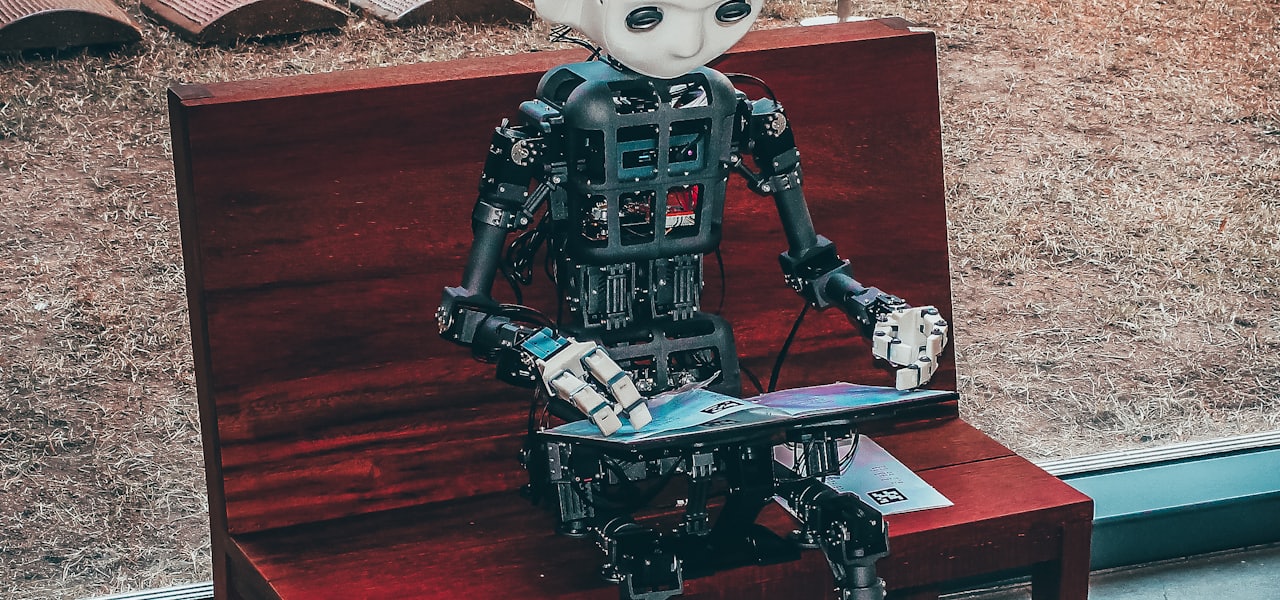
Behavior-based robotics (BBR) or behavioral robotics is an approach in robotics that focuses on robots that are able to exhibit complex-appearing behaviors despite little internal variable state to model its immediate environment, mostly gradually correcting its actions via sensory-motor links. == Principles == Behavior-based robotics sets itself apart from traditional artificial intelligence by using biological systems as a model. Classic artificial intelligence typically uses a set of steps to solve problems, it follows a path based on internal representations of events compared to the behavior-based approach. Rather than use preset calculations to tackle a situation, behavior-based robotics relies on adaptability. This advancement has allowed behavior-based robotics to become commonplace in researching and data gathering. Most behavior-based systems are also reactive, which means they need no programming of what a chair looks like, or what kind of surface the robot is moving on. Instead, all the information is gleaned from the input of the robot's sensors. The robot uses that information to gradually correct its actions according to the changes in immediate environment. Behavior-based robots (BBR) usually show more biological-appearing actions than their computing-intensive counterparts, which are very deliberate in their actions. A BBR often makes mistakes, repeats actions, and appears confused, but can also show the anthropomorphic quality of tenacity. Comparisons between BBRs and insects are frequent because of these actions. BBRs are sometimes considered examples of weak artificial intelligence, although some have claimed they are models of all intelligence. == Features == Most behavior-based robots are programmed with a basic set of features to start them off. They are given a behavioral repertoire to work with dictating what behaviors to use and when, obstacle avoidance and battery charging can provide a foundation to help the robots learn and succeed. Rather than build world models, behavior-based robots simply react to their environment and problems within that environment. They draw upon internal knowledge learned from their past experiences combined with their basic behaviors to resolve problems. == History == The school of behavior-based robots owes much to work undertaken in the 1980s at the Massachusetts Institute of Technology by Rodney Brooks, who with students and colleagues built a series of wheeled and legged robots utilizing the subsumption architecture. Brooks' papers, often written with lighthearted titles such as "Planning is just a way of avoiding figuring out what to do next", the anthropomorphic qualities of his robots, and the relatively low cost of developing such robots, popularized the behavior-based approach. Brooks' work builds—whether by accident or not—on two prior milestones in the behavior-based approach. In the 1950s, W. Grey Walter, an English scientist with a background in neurological research, built a pair of vacuum tube-based robots that were exhibited at the 1951 Festival of Britain, and which have simple but effective behavior-based control systems. The second milestone is Valentino Braitenberg's 1984 book, "Vehicles – Experiments in Synthetic Psychology" (MIT Press). He describes a series of thought experiments demonstrating how simply wired sensor/motor connections can result in some complex-appearing behaviors such as fear and love. Later work in BBR is from the BEAM robotics community, which has built upon the work of Mark Tilden. Tilden was inspired by the reduction in the computational power needed for walking mechanisms from Brooks' experiments (which used one microcontroller for each leg), and further reduced the computational requirements to that of logic chips, transistor-based electronics, and analog circuit design. A different direction of development includes extensions of behavior-based robotics to multi-robot teams. The focus in this work is on developing simple generic mechanisms that result in coordinated group behavior, either implicitly or explicitly.
NeoPaint
NeoPaint is a raster graphics editor for Windows and MS-DOS. It supports several file formats including JPEG, GIF, BMP, PNG, and TIFF. The developer, NeoSoft, advertises NeoPaint as "being simple enough for use by children while remaining powerful enough for the purposes of advanced image editing". The first version, NeoPaint 1.0, was released in 1992 on floppy disks. It supported video modes ranging from 640x350 to 1024x768 and multiple fonts. NeoPaint 2.2 came out for MS-DOS 3.1 in 1993, with support of for 2, 16, or 256 color images in Hercules, EGA, VGA, and Super VGA modes. NeoPaint 3.1 was released in 1995 supporting 24-bit images and formats like PCX, TIFF and BMP. NeoPaint 3.2 was released in 1996. An updated version, NeoPaint 3.2a, supported the GIF file format. NeoPaint 3.2d was released in 1998. A Windows 95 version named NeoPaint for Windows v4.0 was released in 1999 supporting the PNG file format. On September 1, 2018 the program was rebranded as PixelNEO, becoming one of the VisualNEO software products. Formats such as JPEG 2000, ICO, CUR, PSD and RAW are supported.
Canva
Canva Pty Ltd. is an Australian multinational proprietary software company launched in 2013 based in Sydney, Australia. The platform provides a graphic design platform to create visual content for presentations, websites, and other digital products. Its uses include templates for presentations, posters, and social media content, as well as photo and video editing functionality. The platform uses a drag-and-drop interface designed for users without professional design training or experience. Canva operates on a freemium model and has added features such as print services and video editing tools over time. == History == === 2013–2020 === Canva was founded in Perth, Australia, by Melanie Perkins, Cliff Obrecht and Cameron Adams on 1 January 2013. One of the company's early investors was Susan Wu, an American entrepreneur. In its first year, Canva had more than 750,000 users. In 2017, the company reached profitability and had 294,000 paying customers. In January 2018, Perkins announced that the company had raised A$40 million from Sequoia Capital, Blackbird Ventures, and Felicis Ventures, and the company was valued at A$1 billion. It raised A$70 million in May 2019, followed by A$85 million in October 2019 and the launch of Canva for Enterprise. In December 2019, Canva announced Canva for Education, a free product for schools and other educational institutions intended to facilitate collaboration between students and teachers. === 2021–2025 === In June 2020, Canva announced a partnership with FedEx Office and with Office Depot the following month. As of June 2020, Canva's valuation had risen to A$6 billion, rising to A$40 billion by September 2021. In September 2021, Canva raised US$200 million, with its value peaking that year at US$40 billion. By September 2022, the valuation of the company had leveled at US$26 billion. While Canva's value declined from its 2021 peak by mid-2022, it remained one of Australia's most prominent technology companies, alongside Atlassian. In March 2022, Canva had over 75 million monthly active users. In 2023, the pair were named in the Australian Financial Review's AFR Rich List as among the 10 most wealthy people in Australia. On 7 December 2022, Canva launched Magic Write, which is the platform's AI-powered copywriting assistant. On 22 March 2023, Canva announced its new Assistant tool, which makes recommendations on graphics and styles that match the user's existing design. On 11 January 2024, Canva launched its own GPT in OpenAI's GPT Store. The company has announced it intends to compete with Google and Microsoft in the office software category with website and whiteboard products. In May 2024, the company announced the launch of Canva Enterprise, a plan designed for large organisations, alongside new tools including Work Kits, Courses and AI capabilities. In 2024, it announced a co-funded solar energy project to enhance its sustainability efforts. On 10 April 2025, Canva released Visual Suite 2. The new interface combines Canva's design and productivity tools. New features include a spreadsheets application (Canva Sheets), a generative AI coding assistant (Canva Code), a chatbot, and an updated photo editor that can modify or remove background objects. In August 2025, Canva launched a stock sale to employees, valuing the company at US$42 billion. == Acquisitions == In 2018, the company acquired presentations startup Zeetings for an undisclosed amount, as part of its expansion into the presentations space. In May 2019, the company announced the acquisitions of Pixabay and Pexels, two free stock photography sites based in Germany, which enabled Canva users to access their photos for designs. In February 2021, Canva acquired Austrian startup Kaleido.ai and the Czech-based Smartmockups. In 2022, Canva acquired Flourish, a London-based data visualization startup. In March 2024, Canva acquired UK-based Serif, the developers of the Affinity suite of graphic design software, for approximately $380 million. In August 2024, Canva acquired the AI image generation platform and startup, Leonardo AI, for an undisclosed amount. In June 2025, it was announced that Canva had acquired Australian AI marketing startup MagicBrief for an undisclosed amount. In February 2026, Canva acquired two startups: Cavalry, which specializes in animation software, and MangoAI, which focuses on improving advertising performance. In April 2026, Canva acquired Simtheory, an AI Workflow Tool, and Ortto, a marketing automation tool. == Philanthropy == Canva's co-founders, Melanie Perkins and Cliff Obrecht, have publicly stated their intention to donate a significant portion of their personal wealth to charity. In 2021, Canva started a partnership with GiveDirectly, a nonprofit organization operating in low income areas that makes unconditional cash transfers to families living in extreme poverty. Since then, the company has donated $50 million to support GiveDirectly's work across Malawi. In 2025, Canva announced an additional $100 million commitment to expand its GiveDirectly partnership. == Controversies == === Data breach === In May 2019, Canva experienced a data breach in which the data of roughly 139 million users was exposed. The exposed data included real names of users, usernames, email addresses, geographical information, and password hashes for some users. In January 2020, approximately 4 million user passwords were decrypted and shared online. Canva responded by resetting the passwords of every user who had not changed their password since the initial breach. === Russian operations === In May 2022 Canva was criticized for continuing to provide free access to its services in Russia, even after suspending payment processing in the country. Activists from the Ukrainian diaspora in Australia and others said this could be viewed as indirectly supporting Russia’s war effort. They noted the company was the only one of several major Australian firms to receive the lowest “digging in” rating on a tracker run by the Yale School of Management for failing to pull out of Russia. Canva responded that it had suspended financial transactions in Russia from March 2022 and maintained the free version to allow the continued creation and sharing of “pro-peace and anti-war” content for its 1.4 million Russian users.
Semi-automation
Semi-automation is a process or procedure that is performed by the combined activities of man and machine with both human and machine steps typically orchestrated by a centralized computer controller. Within manufacturing, production processes may be fully manual, semi-automated, or fully automated. In this case, semi-automation may vary in its degree of manual and automated steps. Semi-automated manufacturing processes are typically orchestrated by a computer controller which sends messages to the worker at the time in which he/she should perform a step. The controller typically waits for feedback that the human performed step has been completed via either a human-machine interface or via electronic sensors distributed within the process. Controllers within semi-automated processes may either directly control machinery or send signals to machinery distributed within the process. Centralized computer controllers within semi-automated processes orchestrate processes by instructing the worker, providing electronic communication and control to process equipment, tools, or machines, as well as perform data management to record and ensure that the process meets established process criteria. Many manufacturers choose not to fully automate a process, and instead implement semi-automation due to the complexity of the task, or the number of products produced is too low to justify the investment in full automation. Other processes may not be fully automated because it may reduce the flexibility to easily adapt the processes to reflect production needs.
DAvE (Infineon)
DAVE, or Digital Application Virtual Engineer, is a software development and code generation tool for microcontroller applications created in C/C++. == Versions == === Version 4 (beta) === The successor of the Eclipse-based development environment for C/C++ and/or graphical user interface (GUI) based development using application software (apps). It generates code for the latest XMC1xxx and XMC4xxx microcontrollers using ARM Cortex-M processors. DAVE software development kit (SDK) is a free integrated development environment to set up its own apps for DAVE. === Version 3 === Automatic code generation is based on the use of case-oriented, configurable, and tested software (SW) components, called DAVE Apps. They are comparable to executable and configurable application notes that can be downloaded from the web. The environment is based on Eclipse. Ordinary program development using C/C++ is also available. The targets for this development are XMC1xxx and XMC4xxx microcontrollers that use Cortex-M processors. === Previous versions === This version targets 32-bit microcontroller units (MCUs) (Infineon TriCore AUDO family), 16-bit MCUs (C166, XC166, XE166, and XC2000 family), and 8-bit MCUs (XC800 family) from Infineon. After the initial setup, the configuration wizard appears and gives an overview of the hardware peripherals, control units, and modules. The microcontroller application can be created by selecting the desired functions. At this step, module-specific functions must be selected for module initializing and control. Finally, the application source files will be generated by DAVE and embedded in a project in the selected development environment, where the code can still be modified or added to an extant project. == DAVE-related software == Infineon also developed additional software that can be used in conjunction with DAVE for specific microcontroller families or additional hardware: DAVE Bench for XC800 is a platform providing free development tools for Infineon's 8-bit microcontroller family, based on the Open Source Eclipse architecture. DAVE Drive is a GUI-based software tool that allows application developers to create embedded software for the control of brushless synchronous three-phase motors. == Alternative software == The Infineon MCUs are directly supported by several commercial products, depending on the selected MCU target. An embedded programming library for MATLAB exists. As a free alternative to DAVE, the developer can use the Keil Microcontroller Development Kit (MDK) Version 5. Code for the XMX1000 series up to 128 kB can be developed this way without purchasing a license from Keil.
Shepp–Logan phantom
The Shepp–Logan phantom is a standard test image created by Larry Shepp and Benjamin F. Logan for their 1974 paper "The Fourier Reconstruction of a Head Section". It serves as the model of a human head in the development and testing of image reconstruction algorithms. == Definition == The function describing the phantom is defined as the sum of 10 ellipses inside a 2×2 square: